
01
The Invisible Foundation
Modernity has effectively engineered movement out of our daily lives, replacing it with the physiological tax of prolonged stillness. We live in an era of ergonomic convenience that subtly erodes our architectural integrity. However, mobility is not merely a secondary fitness goal or a luxury reserved for the athletic; it is the "base layer" of the human movement system.
True mobility is the prerequisite for safe movement and long-term independence. It is the factor that allows you to recover from an unexpected stumble, navigate a crowded room, or execute the mundane tasks of life with effortless grace. By shifting our focus to "usable movement under real-life conditions," we can move beyond the aesthetics of the gym and toward the preservation of our functional future.
02
The Distinction: Flexibility is Not Mobility
There is a persistent misconception that being "bendy" is the ultimate indicator of health. However, possessing the passive length to reach a position is functionally useless if you cannot control your body once you arrive there. While flexibility refers to the length of a muscle, mobility is the capacity of a joint to move through a useful range with active, neuromuscular control.
In the pursuit of longevity, mobility alone is insufficient if the muscles that govern movement are weak. To navigate the world safely—stepping over obstacles or turning quickly to respond to a stimulus—the body requires a marriage of range and strength.
"In that sense, mobility is not just flexibility; it is usable movement under real-life conditions."
03
The "30–60 Minute Rule" for Hip Freedom
The hip flexors are perhaps the primary casualties of the modern desk-bound existence. Prolonged sitting keeps these muscles in a chronically shortened state, which progressively tightens the hips and restricts "hip freedom." This stiffness is not a temporary inconvenience; it is a structural adaptation that follows you into every stride.
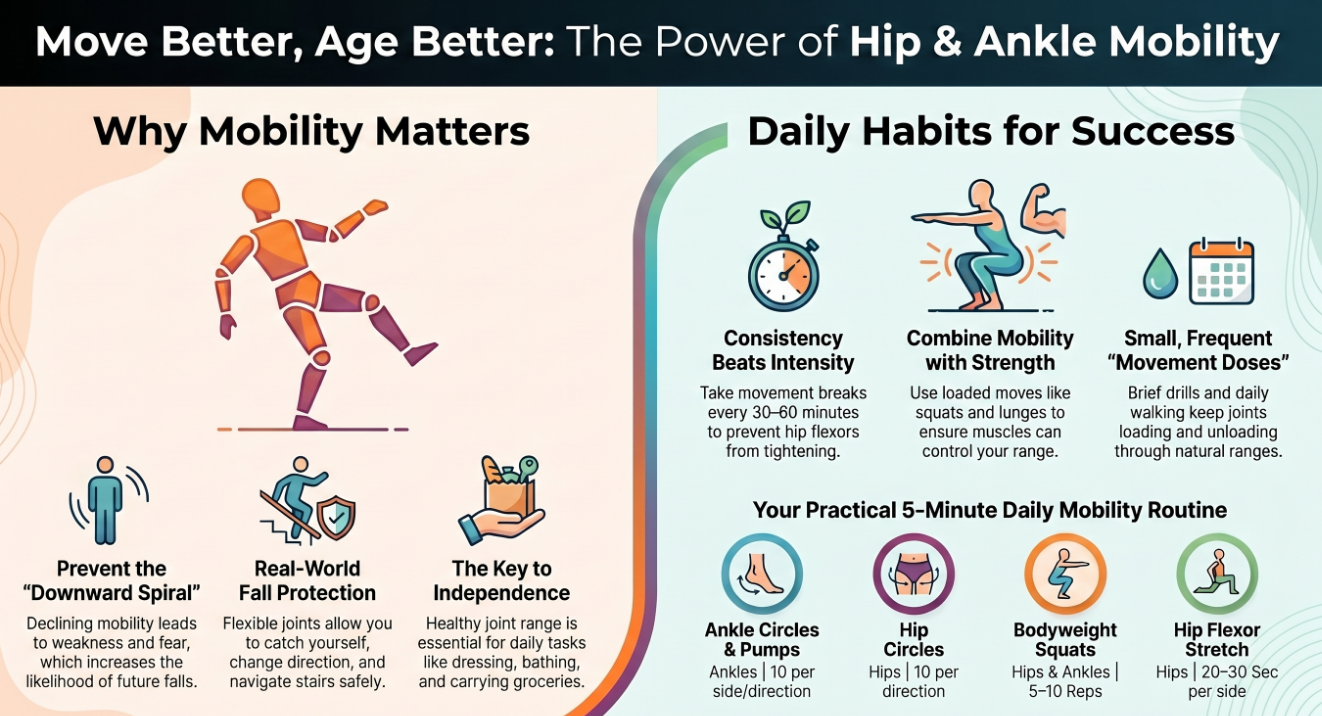
To counteract this, adopt a "movement dose" philosophy. Commit to a movement break every 30 to 60 minutes. In the biology of aging, frequency consistently outperforms intensity. These brief intervals act as a neurological reset, ensuring that sitting-induced stiffness never gains the momentum required to become a permanent limitation.
04
The Downward Spiral of the "Cycle of Weakness"
When mobility fades, it rarely occurs in a vacuum. Instead, it triggers a regressive physical and psychological "cycle of weakness." As joints stiffen, movement becomes laborious and unstable. This physical decline breeds a fear of falling, which instinctively causes individuals to move even less.
This reduction in activity is catastrophic. After an initial fall, activity levels often drop further, which perversely makes the next fall even more likely. Mobility serves as the primary shield against this downward spiral. By maintaining the ability to step, turn, and catch oneself, you preserve the confidence necessary to remain an active participant in your own life.
05
Functional Loading: Beyond Passive Stretching
While a passive stretch offers temporary relief, "loaded" movements are superior for cultivating functional longevity. Loading a joint—applying weight or resistance through a range of motion—teaches the nervous system to remain stable and strong during movement.
- Stair Navigation: Using stairs is a masterclass in functional loading; it forces the hips and ankles to load and unload through a natural, demanding range.
- The Daily Walk: Regular walking is the fundamental habit of the mobile. For long walks, prioritize supportive footwear.
- Active Resistance: Heel raises, controlled calf stretches, and leg lifts ensure mobility is supported by muscle control, not just elasticity.
- Floor Transitions: Practicing getting up from the floor or a chair keeps movement skills sharp.
- Heels-on-Floor Squats: Deep squat holds with heels planted are the gold standard for improving ankle dorsiflexion.
06
Five-Minute Maintenance: A Daily Protocol
Consistency is the only metric that matters. You don't need an hour-long ritual to maintain joint integrity; you need a "small dose" administered daily. Spend 1–2 minutes on hip circles, leg swings, or gentle squats so the joints move well under daily conditions.
The Simple Daily Routine:
- Ankle Circles — 10 reps in each direction
- Ankle Pumps — 10 reps per side
- Hip Circles — 10 reps in each direction
- Bodyweight Squats — 5–10 controlled reps
- Hip Flexor Stretch — 20–30 seconds per side
- Integration Walk — a short walk to weave it into your gait
07
The Base Layer of Independence
At its essence, mobility is the silent partner of self-reliance. It is the prerequisite for the most basic acts of autonomy: dressing, bathing, and carrying groceries. When you move better, you create a virtuous cycle — you can train strength and endurance more consistently, which in turn bolsters your stamina and confidence.
Small, daily doses of movement are the down payment on your future freedom. Ask yourself: is your current movement practice supporting the version of yourself you intend to be in twenty years? Your future independence is being written today by the work you do for your hips and ankles.